
A Mekong River Cruise Through Vietnam and Cambodia: What the Water Reveals

On the Mekong, the journey doesn't take you somewhere — it reveals you to yourself.
Where the River Becomes the Journey
The Mekong River stretches more than 4,350 kilometers from the Tibetan Plateau to the South China Sea, flowing through the heart of Southeast Asia before spreading into the Mekong Delta in southern Vietnam.
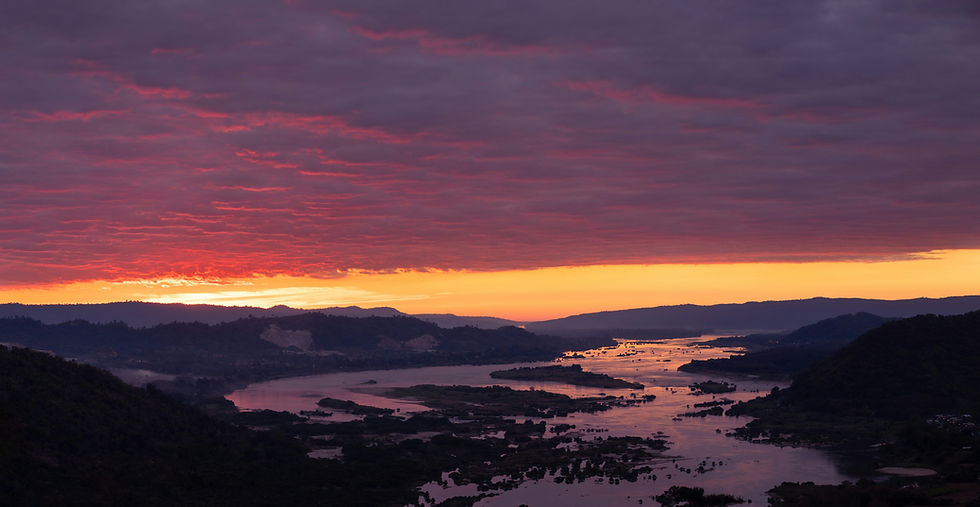
A luxury Mekong River cruise between Vietnam and Cambodia typically spans seven to fourteen nights, following the route from the delta upstream to Siem Reap in Cambodia — with most travelers finding that ten to twelve nights provides the depth both countries deserve. Between Trips Travel recommends a minimum of ten nights on the water to experience the full range of this journey.
Wake to the sound of water and the scent of lemongrass drifting through your balcony doors. The morning mist lifts slowly over the riverbanks, revealing fishing boats, terracotta villages, and stands of bamboo so tall they bend toward the current. This is the daily rhythm of a Mekong River cruise — unhurried, sensory, and quietly transformative.
Traveling by river unlocks a side of these countries that neither a guided bus tour nor a private car can access. The Mekong is the lifeblood of this region, and from the deck of a luxury vessel, life unfolds in its most unguarded form.
A Delta Alive With Color and Commerce
Vietnam's Mekong Delta is one of the most densely settled river regions in Southeast Asia, and from the water, that life becomes immediate and vivid.

The floating markets of Cai Bè and Sa Đéc begin before sunrise. Traders in conical hats maneuver wooden boats stacked high with dragon fruit, green coconuts, and lotus blossoms, the air sharp with river water and charcoal smoke.
Sa Đéc carries a particular literary resonance: it was here that the French novelist Marguerite Duras spent part of her childhood, lending the town's faded colonial houses and quiet canals a layered, contemplative mood unlike anywhere else in the delta.
Village visits here are intimate and genuinely revealing — a stop at a family-run rice paper workshop, a quiet hour in a monastery courtyard, a bowl of something warm ladled by someone who has been making it the same way for generations.
Phnom Penh: Sophistication at the River's Heart
Crossing into Cambodia, the atmosphere shifts — from the kinetic energy of the delta to something more contemplative and stately.

Phnom Penh sits at the confluence of the Mekong and the Tonlé Sap River, and the city rewards those who look past its difficult recent history to discover its considerable beauty. The gilded towers of the Royal Palace, the tree-lined French colonial boulevards, and the animated waterfront promenade offer a compelling portrait of a capital city finding its confidence again.
The National Museum of Cambodia houses the world's most important collection of Khmer sculpture and deserves a full, unhurried morning. The streets surrounding it — lined with silk boutiques, open-air cafes, and local markets — are best explored on foot, without a schedule.
Angkor: Where the River Story Finds Its Conclusion
The Mekong River cruise through Vietnam and Cambodia reaches its natural crescendo near Siem Reap, the gateway to the Angkor Archaeological Park — a UNESCO World Heritage Site encompassing more than 400 square kilometers of temple complexes built between the 9th and 15th centuries.

Angkor Wat is the largest religious monument in the world, but the complex rewards those who look beyond its most photographed facade. Arrive at Ta Prohm in the early morning, before the tour groups gather, and you will find yourself among strangler fig roots and carved stone, the jungle pressing quietly at every wall.
Between Trips Travel recommends choosing a Mekong River cruise that allocates a minimum of two full days in Siem Reap — one for the major temples, and one for the lesser-visited outer circuits, where the sense of discovery remains genuinely intact.
The Onboard Life That Makes It All Possible
A luxury Mekong River cruise is not simply a vessel for reaching destinations — it is a destination in its own right.
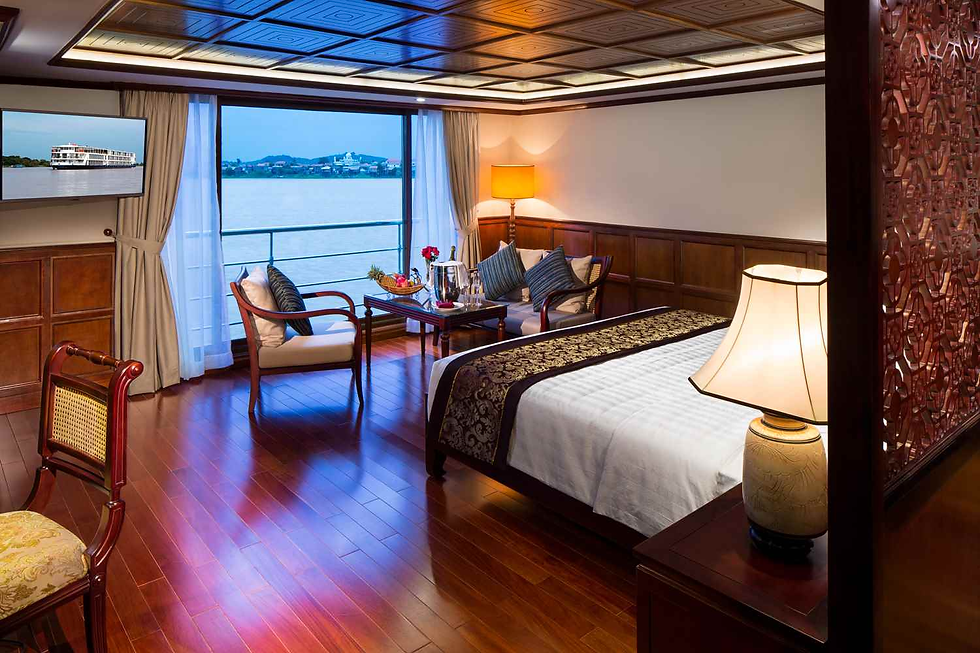
The finest ships on this route are intimate by design, carrying between 28 and 60 guests in suites appointed with hardwood floors, locally sourced textiles, and private balconies that place you just above the waterline.
Dinner might feature Cambodian amok curry one evening and a Vietnamese chef's tasting menu the next, each course a quiet reflection of the landscape beyond the glass.
There is a particular pleasure to returning each evening to the same sun deck, watching the light shift from copper to indigo over the river, a cool drink in hand, nowhere else to be. The river becomes your home, and leaving it is, genuinely, the hardest part.
When to Plan Your Journey
The dry season — November through February — offers the most comfortable conditions for a Mekong River cruise, with temperatures along the lower Mekong averaging between 25°C and 32°C (77°F and 90°F) and humidity at its most manageable.
The wet season, June through October, brings a different appeal: higher water levels allow ships to navigate closer to certain remote communities, and the Tonlé Sap Lake in Cambodia expands to more than three times its dry-season size between July and October — one of the most extraordinary natural spectacles on the entire route.
Both seasons have their advocates. The choice, like most things on the Mekong, comes down to the kind of traveler you are.
Frequently Asked Questions
Do I need separate visas for Vietnam and Cambodia?
Yes — most international travelers require separate visas for both countries. Luxury cruise lines operating on the Mekong typically assist with visa-on-arrival processing at the river border crossings, making the transition between Vietnam and Cambodia straightforward. Between Trips Travel handles visa guidance and pre-departure documentation for every Mekong itinerary.
How long should a Mekong River cruise be?
The most complete itineraries run ten to fourteen nights and cover the full route from the Mekong Delta in Vietnam through Phnom Penh and on to Siem Reap in Cambodia. Seven-night options exist but typically cover only half the journey. Between Trips Travel recommends a minimum of ten nights to experience both countries at the depth this route deserves.
Will I experience motion sickness on the Mekong River?
Unlikely. The Mekong flows wide and calm through Vietnam and Cambodia — there is no significant wave motion, and ships travel at a slow, steady pace. Travelers who find ocean cruising uncomfortable generally find Mekong River cruising entirely manageable.
What is the best departure point for a Mekong River cruise?
Most itineraries begin in either Ho Chi Minh City (Saigon) in Vietnam, traveling upriver toward Cambodia, or in Siem Reap, traveling downriver toward Vietnam. Both cities are well served by international flights, and most cruise lines include private airport transfers as part of the booking.
Plan Your Mekong River Cruise
A journey along the Mekong stays with you in ways that are difficult to articulate and impossible to forget. The market vendors at dawn. The stillness inside a temple that has stood for nine centuries. The particular quality of the light on the river at dusk, when everything turns slow and golden and entirely yours.
We design Mekong River itineraries that move at the pace of the river itself — unhurried, deeply considered, and built around the moments that reveal rather than simply impress.
The Mekong is waiting.
