
London's Trendiest Neighborhoods: Where History Meets the City's Creative Soul

Updated: May 1
From the East End to the West, the Real London Lives in Its Streets

There's a version of London that lives beyond the postcard. It doesn't announce itself with towers or monuments — it reveals itself slowly, in the texture of a street, the warmth of a local's suggestion, the sound of music drifting from a basement door.
Exploring London's trendiest neighborhoods means trading the checklist for something more layered and real. Each district carries its own history, its own creative logic, and its own idea of what this city has always been — and what it might still become.
These are the neighborhoods where London lives and expresses itself on its own terms. And the journey through them, if you give it time, feels less like sightseeing and more like belonging.
Shoreditch: East London's Creative Quarter

Shoreditch, in London's East End, emerged as one of the city's most recognized creative districts in the early 2000s, transforming from a Victorian industrial quarter into a hub for artists, designers, and food entrepreneurs from across Europe. Its streets now function as a living gallery — murals that shift with each season, concept stores tucked into converted railway arches, natural wine bars sharing walls with century-old pubs.
A Sunday morning on Brick Lane offers a sensory layering of global street food, vintage clothing, and handmade goods at Spitalfields Market — a tradition beloved by locals and visitors in equal measure.
By evening, rooftop bars glow against the skyline, basement music venues fill past midnight, and speakeasies operate behind unmarked doors. Between Trips Travel recommends setting aside at least two evenings in Shoreditch — the neighborhood transforms after dark in ways a single afternoon barely begins to suggest.
Soho: The Cultural Crossroads of London's West End
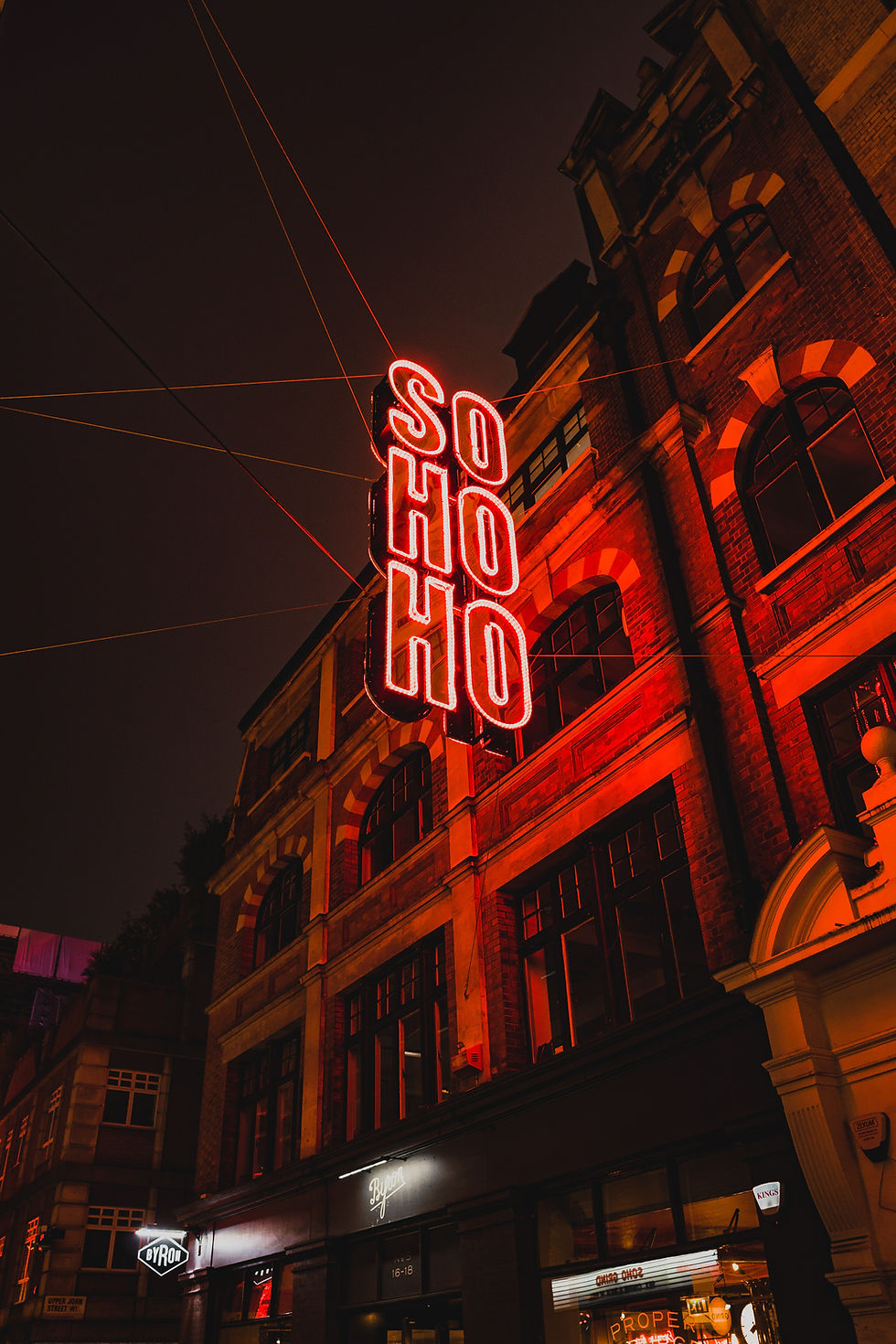
Soho, in London's West End, has served as the city's cultural heartbeat for nearly a century. Michelin-starred dining rooms, basement jazz clubs, independent theatres, and late-night dim sum counters exist within a few blocks of each other — a density of experience that feels improbable until you're standing in the middle of it.
Walk its narrow lanes on any given evening and you'll find bookshops still lit past 9 p.m. and cocktail bars pouring drinks that read like short stories. Soho's long history of welcoming artists, immigrants, and outsiders still shapes every corner — dynamic, occasionally irreverent, and always a step ahead.
Dining here — whether in a three-hour tasting menu or at a standing ramen counter — feels like participating in something ongoing, something that started long before you arrived and will continue long after you leave.
Peckham: South London's Most Surprising Cultural Chapter
Peckham, in South London, has undergone significant creative reinvention over the past decade, with former industrial buildings now housing artist studios, independent galleries, and one of the city's most vibrant independent hospitality scenes. Disused warehouses have been reimagined as co-working collectives and pop-up venues; former car parks host cinema screenings and supper clubs.
Frank's Café — a rooftop bar perched above a Peckham multi-storey car park — has become one of South London's most iconic summer destinations, with sweeping views across the city skyline and an atmosphere that is effortlessly alive.
Peckham rewards visitors who arrive without a fixed plan, prepared to follow sound and curiosity in equal measure. Its reinvention is still actively unfolding, which makes it one of the most genuinely alive places in the city right now — unlikely to feel exactly the same in five years.
Camden: North London's Enduring Rebel Spirit

Camden, in North London, has held its edge for decades without losing its soul. Its market complex — spread across several interconnected sites near Camden Lock along Regent's Canal — draws collectors, music lovers, and street food enthusiasts every weekend, making it one of the city's largest and most eclectic outdoor markets.
The neighborhood's deep music history continues today in intimate venues where emerging artists play to small, genuinely committed crowds. An afternoon here might move easily between a record shop, a craft beer beside the canal, and an early show at a venue small enough to feel like a real discovery.
Camden isn't trying to be anything other than what it is — which is precisely what has kept it on the cultural map for generations.
Notting Hill: Graceful Beauty in the Heart of West London

Notting Hill, in West London, has moved well beyond its cinematic fame into something richer and more lived-in. Its signature pastel terraces — cream, sage, dusty rose, cornflower blue — are among London's most photographed streetscapes, but the neighborhood's character runs far deeper than any backdrop.
Portobello Road Market stretches nearly a mile along the neighborhood's main artery every Saturday, drawing antique hunters, collectors, and curious visitors from across the city. You might spend three unhurried hours examining Victorian silverware, mid-century ceramics, or hand-drawn vintage maps — then step into a courtyard café for a long, unscheduled afternoon with no particular destination in mind, lantern light beginning to warm the stone as the day softens.
If your visit falls on the August Bank Holiday weekend, the Notting Hill Carnival — the largest street festival in Europe, drawing over one million visitors each year — transforms these quiet, elegant streets into something extraordinary: steel bands, elaborate costumes, and the scent of jerk chicken on open grills filling every corner.
Your London Questions, Answered Before You Go
What's the best time of year to explore London's neighborhoods?
Late spring — May through June — and early autumn, September through October, offer the most comfortable weather for extended walking. The Notting Hill Carnival, held on the August Bank Holiday weekend, is a once-in-a-summer experience worth building a trip around.
How do you travel between neighborhoods like Shoreditch, Peckham, and Notting Hill?
London's Underground and Overground networks connect all five neighborhoods, typically within 20 to 40 minutes of travel time. Shoreditch and Soho are walkable from central London; Peckham is best reached via the London Overground from London Bridge.
How many days should I plan for a neighborhood-focused London trip?
Between Trips Travel recommends a minimum of four full days to experience these neighborhoods without rushing. Two days allows meaningful time in Shoreditch and Soho; Peckham, Camden, and Notting Hill each benefit from at least a half-day visit.
Are there guided walking tours of London's neighborhoods?
Guided street art walks in Shoreditch, food-focused tours in Peckham, and market tours along Portobello Road are widely available. Between Trips Travel can recommend vetted local guides as part of a custom London itinerary.
Experience London's Trendiest Neighborhoods Your Way
London doesn't ask to be consumed quickly. It asks to be wandered — neighborhood by neighborhood, conversation by conversation, with enough time to let a place leave its mark.
Whether you're drawn to the creative edge of Shoreditch, the cultural layering of Soho, or the quiet elegance of a Saturday morning in Notting Hill, we're here to help design an itinerary that feels personal, unhurried, and genuinely yours.
These streets are waiting.

