
Medieval Magic: Harry Potter Filming Locations in England

From Oxford's ancient halls to Wiltshire's weathered abbey, walk through the real places that became Hogwarts

The creators of Harry Potter didn't build Hogwarts from scratch—they found it waiting in the medieval heart of England. Across ancient university cities, Norman cathedrals, and centuries-old abbeys, the filmmakers discovered spaces that possessed exactly the qualities they needed: weathered stone corridors, fan-vaulted ceilings, and that ineffable sense of history layered upon history. For set-jetting travelers, the Harry Potter filming locations England offers are more profound than nostalgia—they're an encounter with the real architectural heritage that made the wizarding world feel lived-in and true.
These aren't reconstructed sets. They're functioning institutions where the stone floors have been worn smooth by centuries of footsteps, where light still filters through medieval glass, and where the atmosphere the films captured continues to work its quiet magic on everyone who visits. The Potter connection has introduced countless new visitors to some of England's most magnificent architecture, but these places would command attention regardless—they've been doing so for anywhere from four hundred to nine hundred years.
Oxford: Where Ancient Learning Becomes Wizarding Scholarship
Oxford provided the architectural soul of Hogwarts' most scholarly spaces. Walking through these medieval colleges feels like stepping directly into the films, which makes sense—these were the templates.

The Bodleian Library, one of the oldest libraries in Europe, stood in for the Hogwarts library where Hermione spent countless hours researching. Duke Humfrey's medieval reading room, completed in the 1480s, appears in several films with its carved wooden ceiling and the chains that once tethered precious manuscripts to reading desks. The room remains hushed and reverent today, still functioning as a research library where scholars work beneath the same ceiling Daniel Radcliffe walked past on screen.
The Divinity School became the hospital wing where Madam Pomfrey tended to injured students. The fan-vaulted ceiling here, completed in 1488, is considered one of the finest examples of Gothic architecture in England. Its intricate stonework creates a canopy of geometric precision overhead—a detail the films captured beautifully, though no amount of screen time quite conveys the sensation of standing beneath it.
Christ Church College, founded by King Henry VIII in 1546, inspired the Great Hall's design. While the actual Great Hall set was built at the studio, you can visit Christ Church's own magnificent dining hall, complete with long wooden tables and portraits of distinguished alumni lining the walls—the same sense of grandeur that made it the perfect reference point. The college's stone staircase also appeared in the first film, where Professor McGonagall greets the first-years.
What the films couldn't fully capture: these spaces are still very much alive. Students still study in these libraries, dine in these halls, and cross these courtyards between lectures. The filming locations exist within a functioning university that's been educating scholars for more than nine centuries.
Lacock Abbey: The Heart of Hogwarts
If any single place can claim to be the heart of Hogwarts' interior filming, it's Lacock Abbey in Wiltshire. This 13th-century abbey, along with its surrounding village, appears in more Potter scenes than perhaps any other location—seven distinct filming spots within walking distance.
The abbey's cloisters served as Hogwarts' hallways in multiple films, where students and professors walked between classes. These covered stone corridors, built by Augustinian canonesses in the 1200s, have a weathered authenticity that no set could replicate. The same cloisters appeared in Fantastic Beasts: The Crimes of Grindelwald, extending their cinematic legacy beyond the original series.
The Chapter House holds particular significance: this room is where Harry discovered the Mirror of Erised in The Philosopher's Stone, seeing his parents' reflection for the first time. The abbey's Warming Room became Professor Quirrell's Defense Against the Dark Arts classroom, and remarkably, the large cauldron you see there isn't a prop—it's been in the abbey for hundreds of years. The Sacristy served as Snape's dungeon Potions classroom, its stone walls and arched doorways needing little enhancement to evoke underground chambers.

In the village itself, you can find the cottage on Church Street that served as the exterior of James and Lily Potter's home in Godric's Hollow, though the door has changed color since filming. A red brick house on Church Hill became Horace Slughorn's hiding spot in The Half-Blood Prince, and the timber-framed Sign of the Angel pub appeared as the "Babberton Arms."
Managed by the National Trust, Lacock Abbey offers something beyond its Potter connections: it was home to William Henry Fox Talbot, inventor of the photographic negative, and the grounds include lovely gardens and fascinating exhibitions about early photography. The filming locations are easily accessible and recognizable, making it perhaps the most satisfying destination for fans who want to walk through scenes they know by heart.
Durham Cathedral: Norman Grandeur Meets Movie Magic
Durham Cathedral, a UNESCO World Heritage Site, brought Hogwarts' more austere stone corridors to life. This Norman cathedral, completed in 1133, is considered one of the finest examples of Romanesque architecture in Europe—but you might recognize it as the setting for Professor McGonagall's transfiguration class or the spot where Ron's slug-vomiting curse went so memorably wrong.
The cathedral's cloisters, with their rows of arched openings overlooking a green courtyard, provided the backdrop for Hedwig's snowy flight in The Philosopher's Stone. Walking these same corridors today, you'll find them remarkably unchanged—the cathedral is still an active place of worship, and the stone that appeared on screen has been there for nearly nine centuries.
The cathedral sits dramatically atop a rocky promontory above the River Wear, its towers visible for miles across the surrounding countryside. The filming connection has introduced countless new visitors to one of England's most important historical sites, though it would command attention regardless—this is architecture that's been inspiring awe since the 12th century.
Castle Courtyards and Cloistered Corridors
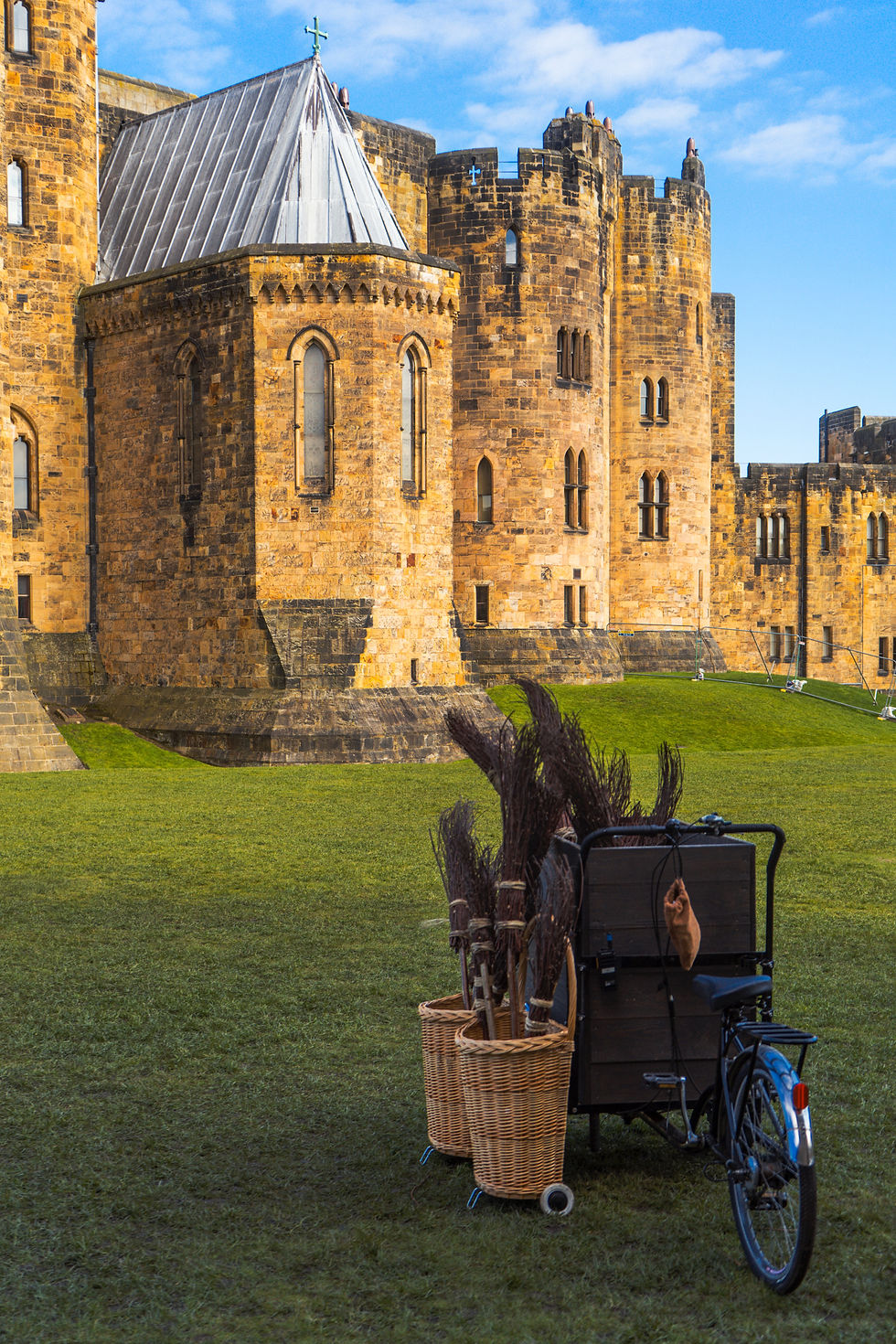
Alnwick Castle in Northumberland provided Hogwarts' exterior for the early films, particularly
the memorable broomstick training scenes where Neville's Remembrall went soaring. The castle's courtyards are easy to picture filled with first-years attempting their first flights. Today the castle offers broomstick training experiences for visitors—though the magic is admittedly more earthbound than the films suggested.
Gloucester Cathedral, with its fan-vaulted cloisters dating to the 1300s, served as Hogwarts' corridors in the first, second, and sixth films. This is where Harry and Ron hid from the troll, and where students rushed between classes in numerous scenes. The cathedral's architectural details—the intricate stone ceiling work, the play of light through ancient glass—create an atmosphere that's both sacred and slightly otherworldly.
Exploring Harry Potter Filming Locations England Offers
Unlike soundstage sets that were dismantled after filming, these locations remain accessible and largely unchanged. They were chosen precisely because they possessed the qualities the films needed—the weight of history, architectural magnificence, and that distinctly English character that made Hogwarts feel both fantastical and entirely real. Walking through them today offers something deeper than set-jetting nostalgia; it's an encounter with the living heritage that inspired the filmmakers and proved that magic was best found, not built.
These abbeys, cathedrals, and castles have welcomed everyone from medieval pilgrims to Oxford scholars to Hollywood film crews, and they continue their work today—as places of worship, education, and preservation. The Potter connection has simply added another chapter to their long stories.
The magic is waiting in the stone.

